


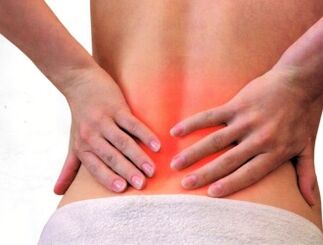
Pain in the lumbar spineis a common pain syndrome that is present in many pathologies.
Not only the spine, but also systemic diseases of internal organs.
Lumbar pain can be of different types: aching and shooting, which often take you by surprise.
As you know, any pain signals problems in the body.
Therefore, pain in the lumbar region is a reason for immediate contact with a neurologist.
Diseases of the musculoskeletal system that cause lower back pain
Spinal disease is characterized by limited mobility and chronic pain in the lumbar region.
The most famous pain syndromes in the lower back:
- Lumbago or lumbago.Acute pain appears suddenly.Stiffness and muscle tension persist for a long time.In addition to osteochondrosis, pain can occur due to displacement of discs in the lumbar region.
- Radiculitis.The nerve roots in the spinal cord become inflamed.The pain syndrome usually does not have an acute onset and may be a symptom of spinal tuberculosis or osteochondrosis.
- Sciatica(sciatic nerve is compressed).Pain in the lower back is paroxysmal and often moves to the sacrum and the back surface of the lower extremities.In women it is observed due to inflammation of the appendages.
But the most common pathologies that are accompanied by pain in the lumbar region are:
- Spondylosis.This is thinning of the vertebrae in the lumbar region.At the same time, the ligaments weaken and bone growth begins, which narrows the spinal canal.The growths compress the nerve endings, which causes numbness in the legs, a feeling of weakness and nagging pain.Often there is a displacement of the vertebrae and discs in this area, which leads to the development of pathologies of other vertebrae that are located below.The functioning of the bladder and rectum may be impaired.
- Lumbar osteochondrosis.The disease manifests itself as loosening of joint tissue.The pathogenesis involves nerves and severe pain, as the nerve roots of the spinal cord are pinched.
- Hernia.The intervertebral cartilage protrudes, violating its integrity and squeezing the nerve roots.The joint loses its functions.The pain often extends to the legs.
- Ankylosing spondylitis.The joints that are responsible for the mobility of the spinal column are affected.
- Stenosis.Chronic inflammation narrows the spinal canal and compresses the nerves in it.Not only pain appears, but also cramps.At rest, the pain disappears, but with any load it returns again.
- Scoliosis.In severe cases, with muscle spasm and the presence of a hernia, intense pain appears in the lower back.
The causes of pain are not always diseases of the musculoskeletal system.To make sure of this, provocative tests are carried out to determine the exact cause of lower back pain.
Other reasons
Lower back pain happens:
- Mechanical.Appears or intensifies in the evening, after a working day.After rest, it decreases or disappears altogether.This pain is often observed in older people.It is caused by structural abnormalities in the back.
- Inflammatory.Morning stiffness is accompanied by painful sensations that disappear after light exercise or taking anti-inflammatory drugs.The cause is considered to be inflammatory spondylopathies.
In addition to the main causes of pain in the lumbar region, there are alsosecondary factorsarising due to concomitant pathologies.These include:
| Spinal curvature: | Failure of metabolic processes that changes the bone skeleton: | Infectious diseases: | Autoimmune pathologies: |
|---|---|---|---|
|
|
|
|
Other pathologies:
- Malignant neoplasms near the spinal column.
- Spinal injuries.
- Painful sensations of a psychogenic nature or after a stroke.
- Gastrointestinal diseases.
- Lower back pain is common during pregnancy and menstruation.
- Inflammation of the ovaries.
- Renal colic.
- Venereal problems.
Associated symptoms
Pain in the lumbar region varies in severity:
- acute– has a shooting character and occurs suddenly;
- chronic– the pain is dull and aching and can last for several months.
Often the pain appears periodically, that is, it takes a recurrent course.
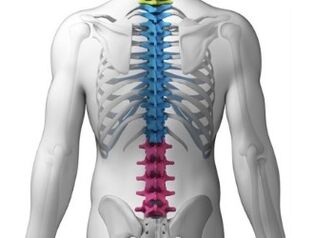
Certain types of pain are characteristic of a separate injury to the structure of the lumbar region:
Local or Local.Appears due to damage to the joints, ligaments, and musculoskeletal system.Such pain is clearly localized, mostly mild, but constant.Changes when body position changes.
Reflected or reflective.Divided into two types:
- Pain is caused by diseases of the internal organs.It radiates to the buttocks and thighs.The painful sensations are deep and aching.Even in a calm state it does not go away.
- Pain syndrome causes damage to the sacrum.The pain is dull and continuous.It radiates to the groin and buttock area.
Radicular pain.Appears due to damage to the nerve roots of the spinal cord.The pain is quite intense, radiating from the spinal column to the periphery.It usually radiates to the legs, right down to the toes.It gets worse from the slightest exertion, even from coughing and sneezing.
Fibromyalgia or muscle pain.Caused by a protective muscle spasm.Occurs in many pathologies of the spine.With prolonged muscle tension, aching and even cramping pain appears.
Treatment of lower back pain
The method of eliminating lower back pain is selected based on the causes and severity of the disease that caused the pain syndrome.Conservative treatment is usually prescribed, although surgical intervention is not excluded.
Symptomatic therapy
The following drugs are used:
- Anti-inflammatory drugs.Quite effectively relieve inflammation and eliminate pain;
- Analgesics;
- Muscle relaxants;
- Gels and ointments;
- Compresses;
- Drugs that reduce degenerative processesin cartilage tissue.
Sometimes therapeutic blockades are prescribed.Painkillers are injected into trigger points.Typically, the analgesic is injected into the epidural cavity of the spine.
Surgical
The absolute indication for surgery is cauda equina syndrome., that is, fecal and urinary incontinence, as well as numbness in the perineal area.
Surgical treatment is required if lower back pain persists for more than six months and begins to radiate to the lower extremities.But before deciding to undergo surgery, the presence of a hernia should be confirmed at a localized level.For this purpose, neuroimaging studies are carried out.
Exercise therapy and massage
Therapeutic exercises are also considered treatment.Physical exercise strengthens the muscular frame of the back, increase blood circulation and increase muscle tone.Exercise therapy is intended both for therapeutic therapy and for the prevention of pain in the lumbar spine.Naturally, exercises are selected individually, taking into account the severity of the pathology.
You can highlight the most useful exercises that are performed 10 times, avoiding overwork:
- While standing, bend your body in all directions.
- Place your feet shoulder-width apart and turn your body left and right.
- Get on all fours.Do the well-known “Cat” exercise.
- Lie on your back, bend your knees.Raise and lower the pelvis with a gradual increase in amplitude.
- Lie on your back, straighten your legs.Bend your legs and pull your knees toward your chest.
- Swing your legs while standing on all fours.
The positive result from gymnastics consolidatestherapeutic massage.It improves blood circulation, and if necessary, can quickly relieve acute lower back pain.Massage movements have a beneficial effect on the flexibility and elasticity of ligaments.Sometimes, and only with the permission of a doctor, a combination of massage with a bath is allowed.But this is prohibited if the pain worsens.
Physiotherapy
The procedures are highly effective and successfully relieve pain in the lumbar region.
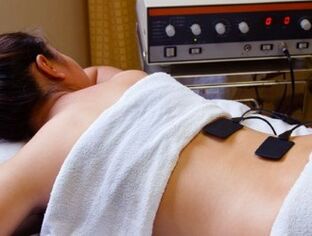
The following methods can be distinguished:
- Use of ultrasound (phonophoresis).Reduces swelling and has an analgesic effect.
- Electrophoresis using anesthetic and calcium.
- Amplipulse therapy.It has a vascular-trophic and analgesic effect.
- Electrical muscle stimulation.Improves blood circulation and relaxes the muscular system.
- Reflexology.
- Paraffin treatment.Restores metabolic processes and improves lymph flow.
- Mud therapy and balneotherapy.
Procedures are prescribed strictly individually, based on clinical symptoms.
The use of folk remedies
For pain in the lumbar region, folk recipes significantly improve your well-being.In order not to harm your health, it is advisable to consult your doctor in advance.There are many effective remedies that can eliminate pain (temporarily).
Popular compresses:
- Mix vinegar and honey in equal proportions.Place the resulting mixture on a cabbage leaf and apply it to the lumbar area, which should then be wrapped in a warm cloth.
- Grind dry burdock leaves and pour boiling water over them.The paste is applied to the sore spot.
- Soften the boiled potatoes and mix with horseradish.Apply the compress to the lower back.
- A chopped onion is applied to the sore spot.
- Mustard powder is diluted with warm water and spread on the lumbar region.
Rubbing:
- Warmed honey.
- Tincture of burdock or eucalyptus.
- A mixture of cologne, iodine, red pepper and valerian.
Infusions taken orally:
- Add crushed cinquefoil root to 500 ml of vodka.You should insist for at least a month.Take one spoon three times a day.
- A handful of wheat is soaked overnight.In the morning, coriander is added and the mixture is boiled in a cup of milk until it becomes thick.Should be consumed twice a day.
Folk remedies are an addition to the main treatment.They significantly improve well-being and reduce pain.
Conclusion
Lower back painmay appear for various reasons, including: osteochondrosis, spondylosis, hernia.There are also other equally dangerous causes of pain - injuries, malignant neoplasms.
If the cause of lumbar pain is known, then it must be treated.However, it is better to pay attention to preventive measures to help prevent skeletal destruction.Exactly following doctors' recommendations will help you avoid discomfort in the lumbar region.
It is necessary to regularly perform therapeutic exercises to strengthen the musculoskeletal system.All it takes is 20 minutes.
Now many people “know” how to eliminate lower back pain, but the main rule should be understood: self-medication is strictly prohibited.Even with mild pain, it is better to consult a doctor.